

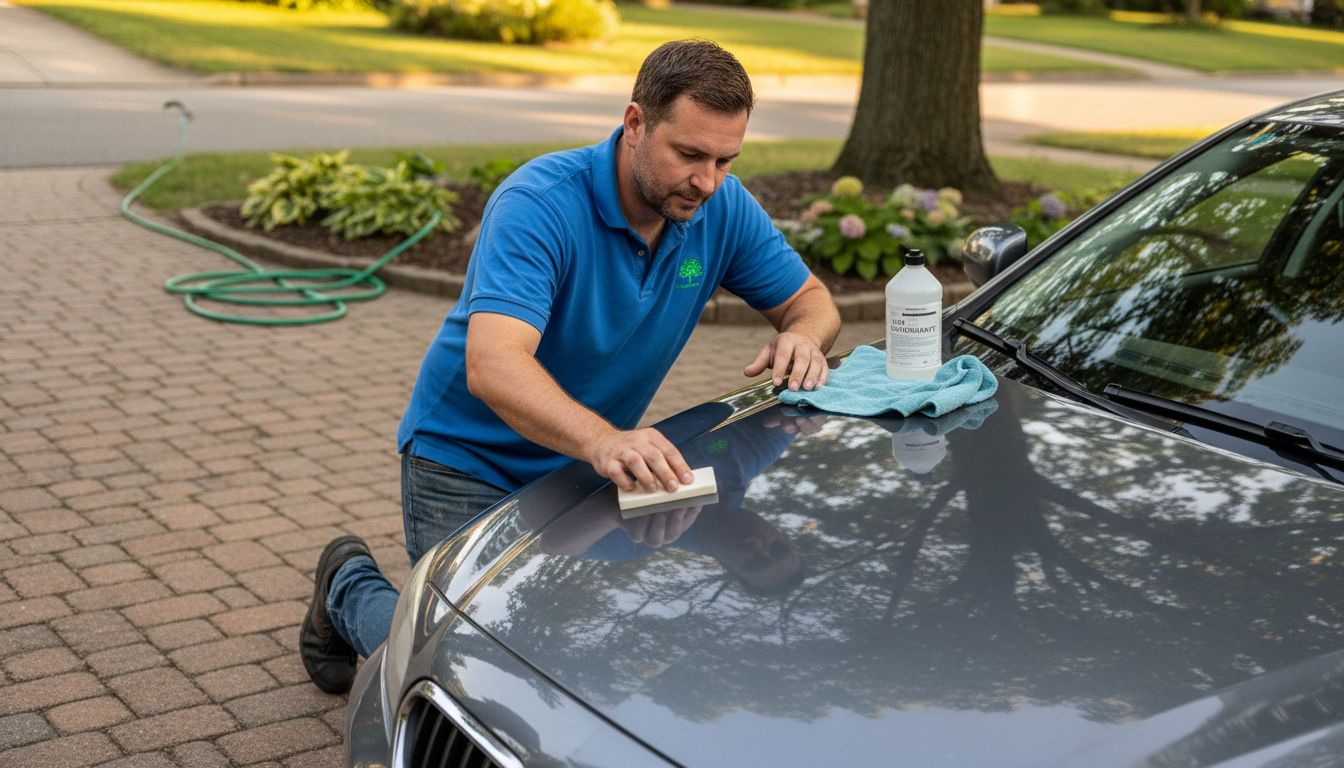
Swirls and stubborn road grime can make your car’s paint look tired no matter how careful you are at the wash bay. Preserving that glossy finish is a challenge for enthusiasts who value eco-friendly products and want professional results from their own garage. With auto detailing clay engineered to capture and lift embedded particles without damaging your paint, this guide helps you understand how clay works, why it matters, and how it gives your vehicle’s surface that unmistakably smooth, vibrant look.
| Point | Details |
|---|---|
| Purpose of Detailing Clay | Detailing clay effectively removes bonded contaminants from automotive paint, enhancing smoothness and visual appeal. It prepares the surface for better adhesion of protective coatings like wax and sealants. |
| Types of Detailing Clay | There are three grades of detailing clay (fine, medium, heavy duty) tailored for different levels of paint contamination and care needs. Choosing the appropriate grade is essential to avoid damage and obtain effective results. |
| Technique and Lubrication | Proper lubrication is crucial when using detailing clay; it prevents potential scratches and facilitates smooth application. Always wash and dry the vehicle first to eliminate loose dirt before clay treatment. |
| Comparison to Other Methods | Detailing clay is unique in its ability to extract contaminants that standard washing and chemical cleaners cannot reach, making it a vital step before polishing or applying protective products. |
Auto detailing clay is a specially formulated synthetic compound designed to remove contaminants from your car's painted surface that regular washing cannot eliminate. Unlike the industrial plasticine used in automotive design, detailing clay is engineered specifically for surface cleaning. When you drag a clay bar across your paintwork, it grabs and lifts embedded particles, fallout from industrial emissions, brake dust, tree sap, overspray, and other microscopic debris that settle into your vehicle's finish. This process leaves your paint feeling extraordinarily smooth to the touch, almost like glass.
The primary purpose of detailing clay is to prepare your car's surface for protection and enhance its visual appeal. Think of clay treatment as a deep cleaning that goes beyond what soap and water accomplish. After you've washed your car, you've only removed surface dirt. Clay bars penetrate deeper, extracting particles that have bonded to the clear coat over weeks or months of driving. Once these contaminants are removed, your paint reflects light more evenly, making colours appear more vibrant and saturated. The smooth surface also provides the ideal base for applying wax, sealants, or ceramic coatings, which adhere far better to a contaminant-free surface.
What makes detailing clay invaluable is that it works on any colour or condition of paint. Whether your vehicle is black, silver, white, or red, the clay removes the same types of contaminants without causing damage when used correctly. The process is straightforward enough for DIY enthusiasts to perform at home, yet professionals use it as a standard step in their detailing workflow. Most car owners find that their paint feels noticeably smoother immediately after clay treatment, and the results remain visible for months, particularly when combined with protective coatings.
Pro tip: Always use a clay lubricant or soapy water when working with your clay bar, as this reduces friction and prevents the clay from sticking to or scratching your paint.
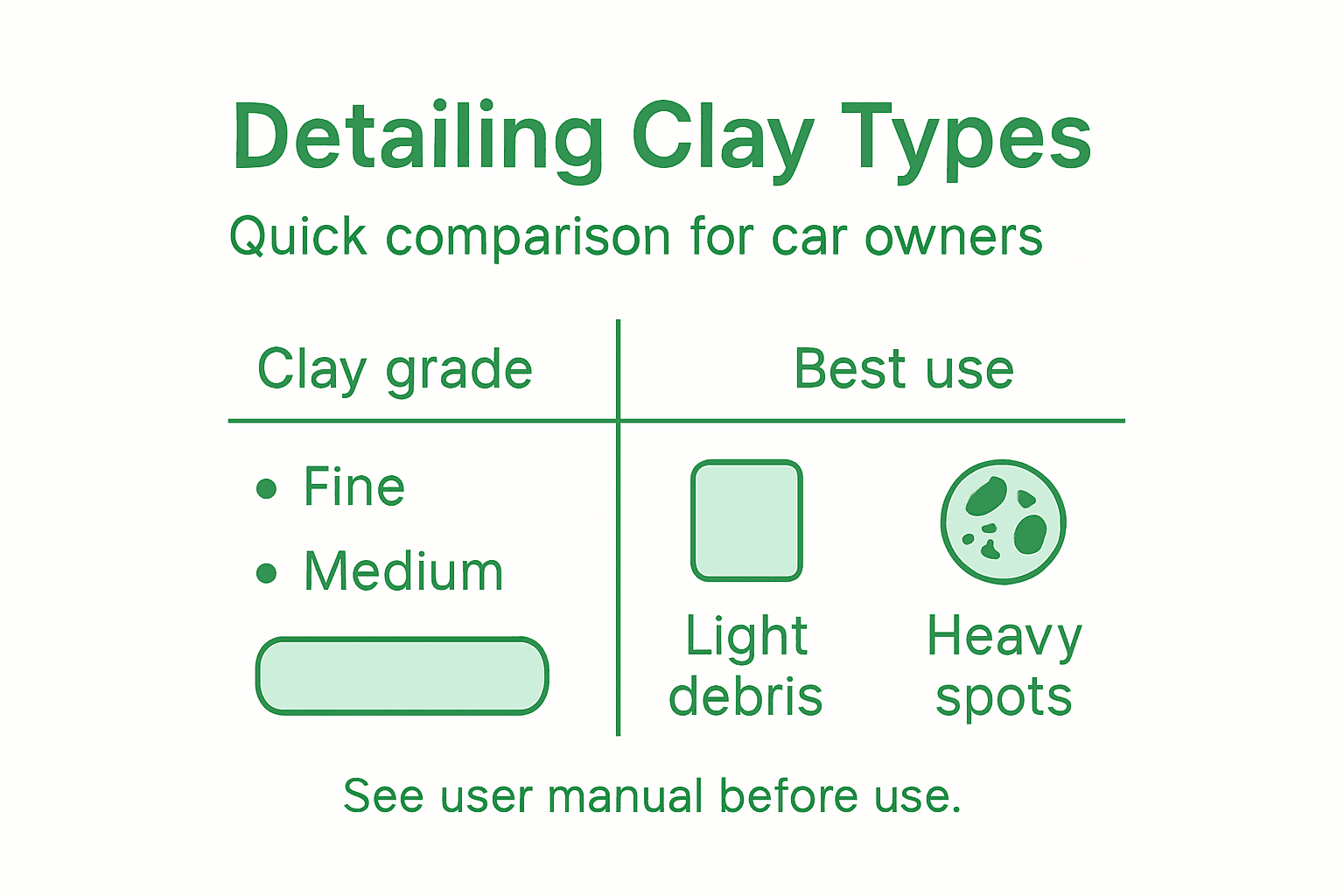
Detailing clay products vary considerably depending on their composition and the specific contaminants they target. Commercial automotive clay bars are engineered from synthetic materials or natural clays formulated to be gentler than raw clay found in nature. The most common types you'll encounter fall into three categories based on their abrasiveness level: fine grade, medium grade, and heavy duty grade. Fine grade clay is ideal for regular maintenance on paint in good condition, removing light contamination without aggressive cutting. Medium grade handles moderate contamination like industrial fallout and light overspray, striking a balance between effectiveness and safety. Heavy duty clay tackles severe contamination, oxidation stains, and stubborn debris, though it requires more careful technique to avoid swirl marks.
The underlying clay mineral compositions/10%3A_Weathering_Soil_and_Clay_Minerals/10.05%3A_Clay_Minerals) directly influence how each product performs on your paint. Some formulations use montmorillonite, which has excellent absorption properties and picks up contaminants efficiently. Others rely on kaolinite for a finer texture that minimises surface scratching. Manufacturers also add lubricants, resins, and polymers to create products that glide smoothly across your paint whilst maintaining their ability to capture particles. This is why branded automotive clay bars perform better than generic alternatives, despite appearing similar to the untrained eye.
Beyond traditional clay bars, you'll find clay mitts and clay pads that offer alternative application methods. Clay mitts feature a microfibre surface infused with clay particles, allowing you to work faster across larger areas without constantly kneading your clay bar. Clay pads attach to orbital buffers for professional-level results, though they require more experience to use safely. Some detailing enthusiasts prefer one format over another based on their vehicle's condition and the time they want to invest. What matters most is understanding that each type serves a specific purpose, and using the wrong grade can either waste your effort or damage your paint if applied too aggressively.
Use this guide to choose the appropriate type of detailing clay for your vehicle’s condition:
| Clay Grade | Target Contaminants | Paint Condition | Application Risk |
|---|---|---|---|
| Fine Grade | Light fallout, pollen | Good/new paint | Very low, safe for most |
| Medium Grade | Road tar, mild overspray | Moderate contamination | Slight with poor technique |
| Heavy Duty | Oxidation, stubborn debris | Severely neglected | Higher, risk of swirling |
Pro tip: Start with fine grade clay on your vehicle, and only upgrade to medium or heavy duty if you notice contamination remaining after your first pass.
Detailing clay operates through a surprisingly simple yet effective mechanism. When you glide a clay bar across your car's paint whilst using a lubricant, the clay's surface makes contact with thousands of tiny particles embedded in your clear coat. These particles—brake dust, industrial fallout, tree sap residue, and other contaminants—have bonded to your paint through months of exposure. The clay's texture is tacky enough to grab these particles but gentle enough not to damage the underlying paint. As you work the clay bar across each panel, it peels away a microscopically thin layer containing the trapped contaminants, revealing the fresh, smooth paint beneath.
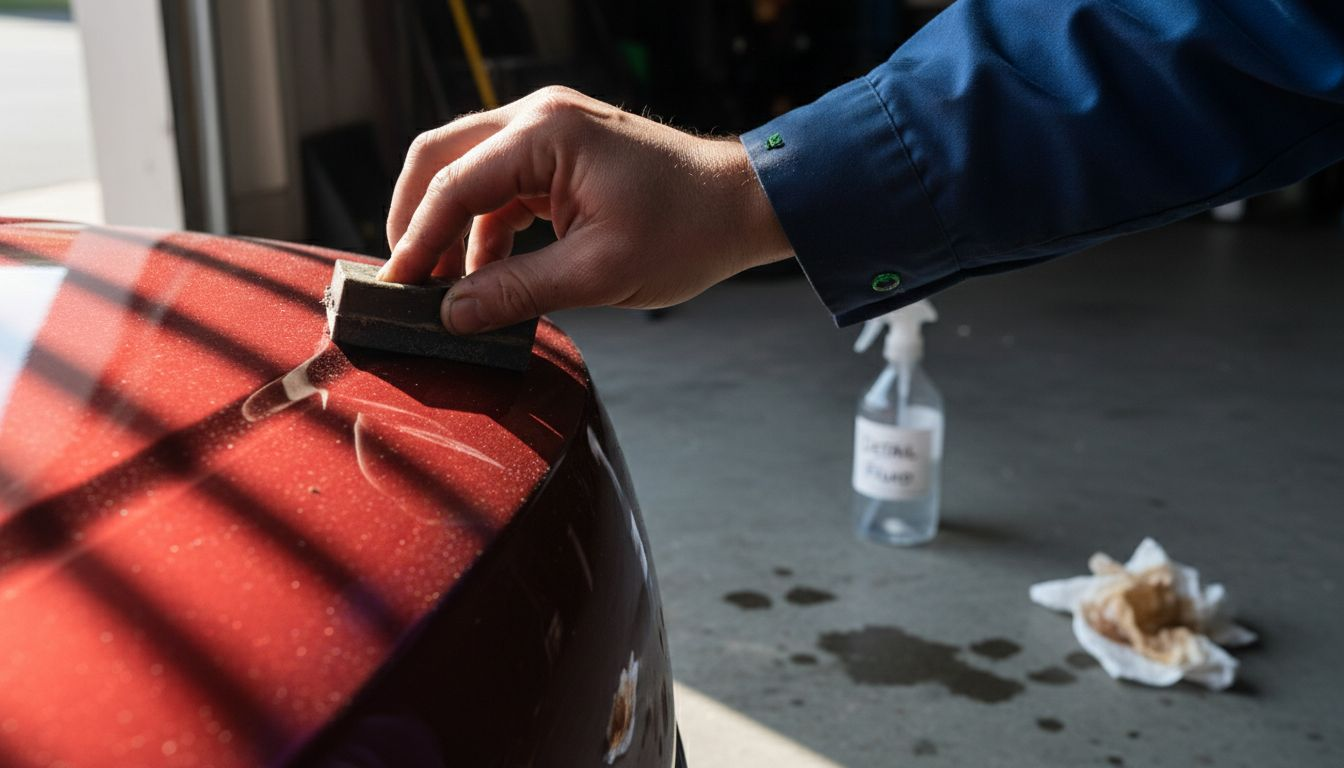
The reason clay works so effectively lies in its unique layered mineral structure and affinity for trapping particles. Clay minerals possess natural properties that enable them to absorb and hold onto impurities at a molecular level. When formulated for automotive use, this characteristic allows the clay to capture not just large visible debris but also fine particulates and chemical compounds that your standard car wash misses completely. The lubricant you apply during the process serves a critical function—it reduces friction between the clay and paint, allowing the clay to slide smoothly whilst maintaining its grip on contaminants. Without proper lubrication, the clay would stick too aggressively and potentially scratch the surface you're trying to protect.
What makes detailing clay particularly valuable is that it works uniformly across your entire vehicle regardless of paint colour or condition. Unlike polishing compounds that remove clear coat, clay simply extracts what shouldn't be there in the first place. You'll notice the difference immediately—your paint feels silkier, and light reflects off it more evenly. This transformation happens because you've eliminated the microscopic texture created by contaminant accumulation. Once your paint is perfectly smooth, protective products like wax or ceramic coatings bond far more effectively, creating a superior protective layer. Think of clay as preparing your canvas before applying the final coat of varnish.
Pro tip: Fold your clay bar regularly as you work to expose fresh surfaces, and discard it immediately if it touches the ground or if you accidentally drop it, as dirt embedded in the clay can scratch your paint.
Getting clay treatment right requires attention to preparation and technique. Begin by giving your car a thorough wash with your usual car shampoo and water, then dry it completely. This removes loose dirt that could otherwise get trapped under your clay bar and cause scratches. Once your vehicle is clean and dry, work in shaded areas or wait until the paint has cooled, as applying clay to hot surfaces makes it stick too aggressively and increases the risk of damage. Spray your lubricant generously onto a small section of the paint, then spray some directly onto your clay bar. Use light to medium pressure with straight line motions across the panel, overlapping your strokes slightly as you work from top to bottom. This methodical approach ensures you cover every area uniformly without missing spots.
One of the most critical mistakes people make is applying clay without adequate lubrication or on insufficiently prepared surfaces. Dry paint causes the clay to grip too firmly, potentially creating swirl marks or micro scratches. Equally damaging is reusing dirty clay that has accumulated contaminants. As you work, your clay bar gradually fills with trapped particles, and continuing to use it can deposit those particles back onto your paint. Fold or knead your clay frequently to expose a clean surface, and replace it with fresh clay once it becomes visibly soiled or falls to the ground. Applying excessive pressure is another common error. Let the clay do the work with light pressure, allowing the lubricant to facilitate the removal process rather than forcing results through brute strength.
Workflow matters just as much as technique. Work on one panel at a time, completing it fully before moving to the next area. This prevents you from having to re treat sections and keeps your progress visible. After completing your entire vehicle, you'll notice a dramatic difference in how smooth the paint feels. The transformation is immediate and rewarding. Many enthusiasts find that clay treatment becomes their favourite detailing step precisely because the results are so tangible and the process is straightforward once you understand the fundamentals. Take your time, stay patient with the process, and you'll achieve professional quality results from your driveway.
Pro tip: Work on a cloudy day or in shade to prevent your lubricant from drying too quickly, which disrupts the clay's ability to glide smoothly and reduces effectiveness.
When it comes to removing contaminants from your vehicle's paint, you have several options, but they work in fundamentally different ways. Standard car washing with soap and water removes surface dirt and loose debris, but it cannot extract particles that have bonded chemically to your clear coat. This is where clay detailing excels. Unlike aggressive industrial cleaning methods such as waterjet and abrasive blasting, which are designed to strip surfaces for industrial applications, clay offers a gentle yet highly effective approach specifically suited to automotive paint. Those industrial techniques would devastate your car's finish, removing not just contaminants but substantial layers of clear coat and base colour. Clay strikes the perfect balance between effectiveness and safety.
Chemical cleaning agents and detergent based products work through a completely different mechanism than clay. These products break down and chemically emulsify contaminants so they dissolve into the cleaning solution and wash away. Whilst effective at removing surface level dirt and grease, chemical cleaners cannot access particles that have physically bonded deep within your clear coat's microscopic texture. This is precisely why clay remains essential even after you've used quality chemical cleaners. Clay physically absorbs and extracts those stubborn embedded contaminants that chemistry alone cannot touch. Think of it this way: a chemical cleaner is like taking a shower to wash away surface grime, whilst clay is like using an exfoliating scrub to remove dead skin cells that won't wash away with soap alone.
Polishing and compounding represent yet another category of paint treatment. These methods use abrasive particles to cut through the clear coat, removing oxidation and minor scratches along with the surface layer containing contaminants. Polishing works brilliantly for correcting paint defects but removes material in the process. Clay, by contrast, removes only the contaminants without sacrificing any clear coat thickness. This is why detailing professionals always use clay before polishing or applying protection. Clay preparation ensures your polish works more efficiently and your wax or ceramic coating bonds to a truly clean surface. The sequence matters: wash, clay, polish if needed, then protect. Each step serves a distinct purpose that the others cannot replicate.
Here’s a concise comparison of automotive surface cleaning methods to highlight their purpose and impact:
| Cleaning Method | Main Function | Impact on Paint | Suitable For |
|---|---|---|---|
| Car Washing | Removes loose dirt and debris | No effect; gentle | All vehicles, routine care |
| Clay Bar Treatment | Extracts bonded contaminants | Leaves paint smooth | Pre-wax, protection prep |
| Chemical Cleaners | Breaks down surface grime | No depth cleaning | Oils, tar, grease removal |
| Polishing/Compounding | Removes oxidation and scratches | Removes clear coat | Paint correction sessions |
Pro tip: Use clay as your preparatory step before any protection product application, as contaminant free paint allows wax, sealants, and ceramic coatings to bond far more effectively and last considerably longer.
Struggling with embedded contaminants that rob your car of its shine and smoothness is a common challenge for vehicle owners. The article "Auto Detailing Clay Unlocking a Smoother Car Finish" highlights how using the right grade of detailing clay combined with proper techniques can transform your paintwork and prepare it perfectly for long-lasting protection. Achieving that flawlessly smooth surface requires not only knowledge but also access to quality products and trusted services.

Take control of your vehicle’s appearance today by exploring professional detailing solutions and premium maintenance products available at With EEZ. Whether you need expert detailing services that apply clay treatment with precision or you prefer to handle the process yourself with top-grade supplies, our platform supports your goals. Visit With EEZ now to harness effective, eco-friendly vehicle care options and enjoy a finish so smooth you can feel the difference. Don’t wait for contaminants to dull your paint - start your journey towards showroom-quality shine today.
Auto detailing clay is a synthetic compound designed to remove contaminants such as industrial fallout, brake dust, and tree sap from your car’s painted surface that regular washing cannot eliminate. It leaves the paint smooth and prepares it for wax or sealant application.
Begin by washing and drying your car. Apply a lubricant to a small section of the paint and the clay bar. Glide the clay in straight lines, overlapping strokes without applying excessive pressure. Fold the clay regularly to expose a clean surface and replace it if it becomes dirty.
Detailing clay typically comes in three types: fine grade, medium grade, and heavy duty. Fine grade is for light contamination on good paint, medium grade is for moderate contamination, and heavy duty is for severe contamination and oxidation. Choose based on the condition of your vehicle's paint.
Lubrication reduces friction between the clay and your car’s paint, allowing the clay to glide smoothly and effectively capture contaminants without scratching the surface. Without adequate lubrication, the clay could stick too much, potentially damaging the paint.